

Learn about the connection between poor sleep and acne, what the gut-skin axis is, and how stress is affecting your skin.
Introduction
No matter how much skincare you apply, you face breakouts. You’re far from being alone. Many people suffer from the same, and in most cases the reason behind this is your lifestyle habits. You may have finally managed to clear your skin, but another breakout may happen again.
There also may be a possibility that you've been struggling to fall asleep, waking up tired, and relying on coffee to get through the day. Are you understanding the connection?
Your skin and your sleep influence each other way more than you realise. Yes, many people believe that acne is linked to hormones, which it is; however, there is now research that helps us understand that hormones alone don’t dictate how your skin is going to look. Sleep quality, stress, and gut health may also affect how your skin looks and feels (Samaniego et al., 2025).
If you need to make a change to how your skin feels and looks, you need to start with changing your lifestyle habits, as late-night screen use, chronic stress, inconsistent sleep schedules, and poor recovery can all influence the body's natural repair processes.
At the same time, digestive health and the gut microbiome play an important role in immune regulation and inflammation, both of which are increasingly being studied in relation to skin health.
In this blog, we’ll explore the poor sleep and acne connection; answer 'Does lack of sleep cause acne?'; explain the gut-skin axis and acne; discuss the role of a probiotic supplement for acne; and look at how combining a melatonin spray for sleep with gut-focused nutritional support creates a skin and sleep supplement combo that complements healthy daily habits. Let’s start with the basic question that you might have: “Does lack of sleep cause acne?”
Does lack of sleep cause acne?
This is one of the most common questions that people ask, and it’s not their fault, as many people believe it to be true; however, sleep doesn't directly cause acne. However you should keep in mind that if you have poor sleeping habits, that sure may cause breakouts frequently.
Sleep is essential to the overall functioning of your body. You might not feel the impact of poor sleep in the short run; however, if you still aren’t cautious, you may suffer from many issues, let alone breakouts, as when sleep becomes inconsistent, your body experiences changes in stress hormones, recovery processes, and inflammatory responses, and these changes may indirectly influence skin health.
People experiencing chronic sleep deprivation often report the following:
-
Increased stress
-
Slower skin recovery
-
Dull-looking skin
-
Reduced energy
-
Difficulty maintaining healthy routines
Acne develops because of multiple factors working together, including genetics, hormones, oil production, bacteria, and inflammation. Sleep quality may become one of those contributing lifestyle factors.
Sleep supports tissue repair, immune function, and overall recovery, all of which contribute to healthy skin function (Bryan, 2026). Now let’s understand the connection between your sleep and acne.
What’s the connection between poor sleep and acne?
Your sleep plays an important role in repairing your body. When you have a proper sleep, your body performs recovery at its finest, and your skin repairs itself. Proper sleep also helps you achieve tissue repair and hormone regulation.
Poor sleep may influence the following:
-
Stress hormone balance
-
Skin barrier recovery
-
Inflammatory responses
-
Overall skin appearance
Think of nighttime as your skin's maintenance shift. When that shift becomes shorter or less effective, repairs may not happen as efficiently.
This doesn't mean sleeping longer automatically eliminates acne. Rather, quality sleep becomes one important part of an overall skincare strategy. If you keep getting breakouts, read the next paragraph.
Why do I keep getting acne breakouts?
You can’t hold a single cause to be the main reason behind regular breakouts, as there are many contributors that may be the reason for you getting regular acne breakouts.
Some of the common contributors are:
-
Hormonal changes
-
Genetics
-
Excess oil production
-
Chronic stress
-
Poor sleep
-
High-glycemic diets
-
Inconsistent skincare
-
Gut health
Addressing only one factor while ignoring the others often leads to frustration.
A balanced approach generally produces better long-term results than chasing quick fixes. Let’s now understand how stress may affect your breakout.
Stress and acne breakouts
If you think stress only affects your mood, you’re wrong. Stress, if persistent, can produce hormones that may turn out to be harmful for your body, as they may influence oil production and inflammatory pathways.
Common signs of chronic stress include:
-
Difficulty sleeping
-
Fatigue
-
Increased skin sensitivity
-
Reduced concentration
-
Muscle tension
Managing stress doesn't eliminate acne overnight, but it supports overall well-being and may help reduce one contributing factor.
Healthy stress-management techniques include:
-
Walking
-
Meditation
-
Journaling
-
Exercise
-
Deep breathing
-
Spending time outdoors
Now you know how stress may affect your skin breakout. Now let’s understand the gut-skin axis and how it triggers your acne.
Gut-skin axis and acne
If you haven’t heard about the gut-skin axis, you’re missing out on a lot. The gut-skin axis acts as a two-way communication that links your digestive tract and your skin, which is driven primarily by gut microbiome, immune system and metabolic signals.
The gut microbiome influences immune responses, digestion, and inflammatory balance. While research continues to evolve, maintaining a healthy gut is increasingly recognised as part of a holistic approach to skin health.
A healthy gut supports:
-
Nutrient absorption
-
Immune function
-
Overall well-being
Gut health influences multiple body systems through interactions between the microbiome, immune system, and digestive tract (Zhao et al., 2025).
Can a probiotic supplement support skin health?
A probiotic supplement for acne is best viewed as part of an overall wellness strategy rather than a standalone solution. However, you should first know what a probiotic is. Probiotics are beneficial microorganisms that support your healthy gut microbiome.
In simple terms, they are live microorganisms that you insert in your body in order to help your gut. You should keep in mind that probiotics aren't acne treatments; researchers continue exploring how gut health influences inflammatory skin conditions.
A probiotic supplement for acne is best viewed as part of an overall wellness strategy rather than a standalone solution.
Potential supportive habits include:
-
Eating fermented foods
-
Consuming enough dietary fiber
-
Staying hydrated
-
Managing stress
-
Sleeping well
Together, these habits create an environment that supports both digestive and skin health. Let’s now learn why sleep support matters for healthy skin.
Why sleep support matters for healthy skin
As we now know, sleep plays a huge role in repairing your body. You should keep in mind that every night your body performs different essential repairs, and a quality sleep may support the following:
-
Tissue recovery
-
Hormonal balance
-
Immune function
-
Healthy skin barrier function
If your sleep suffers consistently, your skin may eventually reflect those changes.
Improving sleep isn't simply about getting more hours.
It's about creating conditions that allow restorative sleep to occur. Now let’s understand what supplements you should use if you’re struggling to sleep.
Melatonin spray for sleep
If you've heard of melatonin, you know your game; however, if you don’t know about it, melatonin is a hormone naturally produced by the body that helps regulate the sleep-wake cycle.
A melatonin spray for sleep provides melatonin in a convenient oral spray format that fits easily into a bedtime routine.
Many people prefer sprays because they are
-
Convenient
-
Portable
-
Easy to use
-
Water-free
Melatonin supplements should complement, not replace, good sleep hygiene.
Melatonin may help support sleep timing for some individuals when used appropriately, but healthy bedtime habits remain essential (Wikipedia contributors, 2026).
Building a skin and sleep supplement combo
If you’re thinking that buying one supplement will help you achieve all your goals you have for your skin, it’s not possible. What you need to do instead is to follow a proper wellness routine that doesn't just involve your supplements but also a good lifestyle habit and proper sleep.
A balanced skin and sleep supplement combo may include the following:
Gut support
-
Probiotic support
-
Fiber-rich foods
-
Hydration
Sleep support
-
Consistent bedtime
-
Reduced evening screen time
-
Melatonin sleep support when appropriate
Skin support
-
Gentle cleansing
-
Daily sunscreen
-
Balanced nutrition
-
Adequate hydration
Rather than treating these systems separately, many wellness approaches now recognise how closely they're connected.
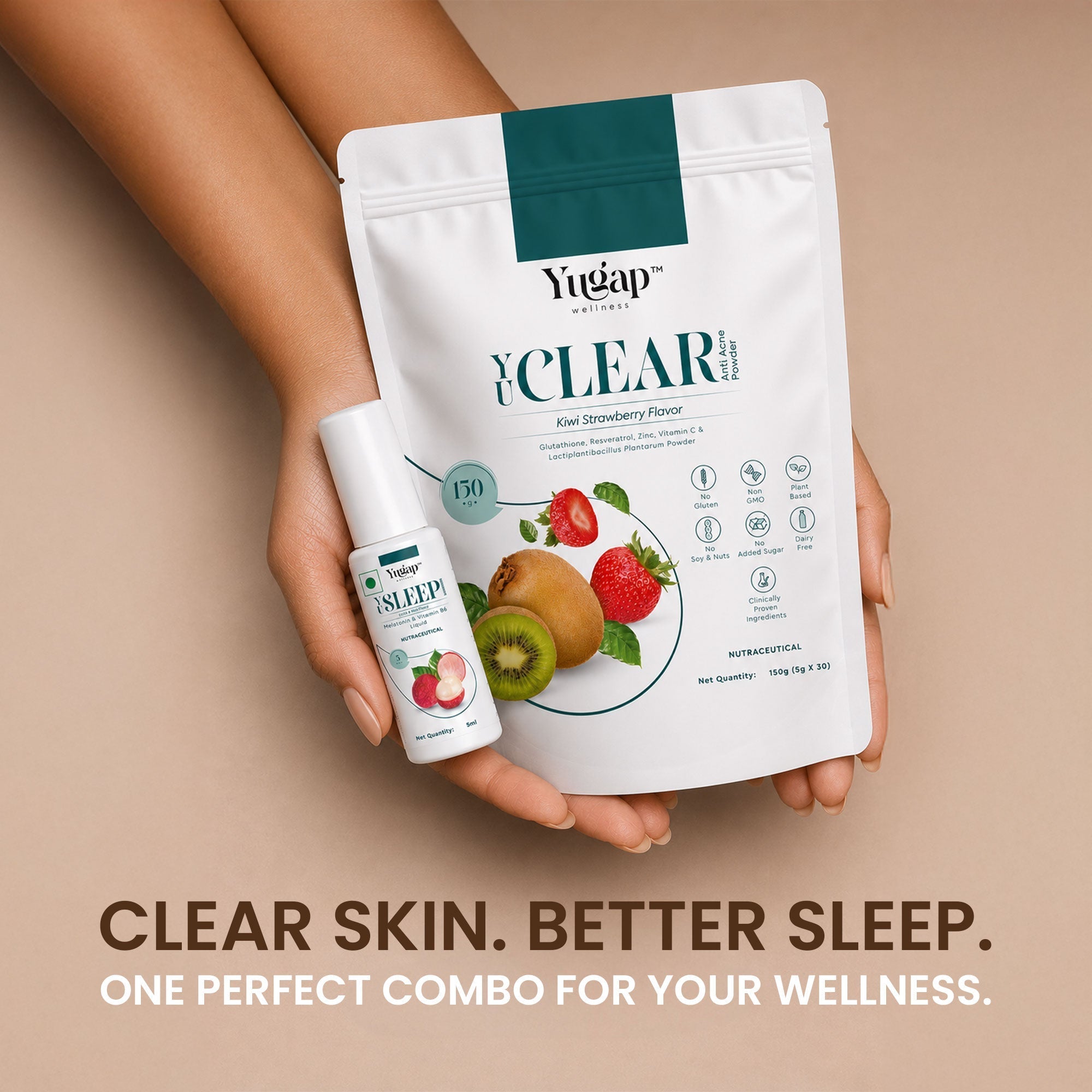
The clear and calm combo
The Clear & Calm Combo reflects an inside-out approach to well-being.
Instead of focusing only on visible breakouts or occasional sleepless nights, it supports two important foundations of wellness:
-
Gut and skin health
-
Healthy sleep routines
Products that support digestive wellness alongside sleep hygiene encourage consistency rather than temporary fixes.
The goal isn't perfection.
It's helping your body recover naturally through healthier daily habits.
Daily habits that support better skin and sleep
|
Morning |
Evening |
|
Start your day with water |
Reduce your screen time, especially before bedtime |
|
Eat a balanced breakfast |
Gentle skincare routine |
|
Try to get some sunlight |
Avoid consuming caffeine late in the day |
|
Exercise and get your body moving |
Maintain a consistent bedtime |
Simple routines repeated consistently often produce the greatest long-term improvements.
Conclusion
We talked about everything that you need to do to help yourself with the breakouts; however, you should always keep one thing in mind: that using a product alone won't make any difference to your skin. You need to compliment it with good lifestyle habits.
Healthy skin and good sleep share very much in common, and you should never forget the advantages of sleep, as it is one of the most important treatments you can add to your life.
Skin reflects what happens inside your body; if your stress increases, quality sleep decreases, or your gut health becomes imbalanced, it is reflected. This is the reason why addressing only the surface often overlooks the bigger picture.
The Clear & Calm Combo embraces a holistic approach by supporting gut health, healthy sleep routines, and overall well-being together. Combined with balanced nutrition, regular exercise, hydration, stress management, and consistent skincare, this inside-out strategy helps create the conditions your body needs to recover naturally.
FAQs
How does lack of sleep cause breakouts?
Lack of sleep causes a breakout because it results in increasing stress hormones, and in many cases it might also raise your body's inflammation and stop your skin repair. Whereas a good sleep schedule may help you maintain fine skin, as your body mostly repairs itself when you sleep.
How does cortisol result in recurring acne?
Cortisol is a hormone produced by your adrenal glands that acts as your body’s main stress response regulator. It results in acne by increasing skin oil production, trapping dead skin cells in pores and triggering inflammation.
What is the link between poor sleep and gut health?
Poor sleep and gut health are directly related, as they share a two-way connection that is driven by the gut-brain axis. Lack of quality sleep often results in disrupting your gut bacteria and might increase inflammation.
How to calm systematic skin inflammation?
If you’re looking to calm your systematic skin inflammation, you need to involve a combination of topical care, trigger avoidance, and lifestyle adjustments to your life.
References
-
Bryan, L. (2026, June 11). Why is sleep important? Sleep Foundation. https://www.sleepfoundation.org/how-sleep-works/why-do-we-need-sleep
-
Samaniego, M., Alonso, M., Sohail, N., & Mostaghimi, L. (2025). Sleep Disturbances and acne: A Comprehensive review. Dermatology Practical & Conceptual, 15(4), 5530. https://doi.org/10.5826/dpc.1504a5530
-
Wikipedia contributors. (2026, August 2). Melatonin. Wikipedia. https://en.wikipedia.org/wiki/Melatonin
-
Zhao, Y., Yu, C., Zhang, J., Yao, Q., Zhu, X., & Zhou, X. (2025). The gut‑skin axis: Emerging insights in understanding and treating skin diseases through gut microbiome modulation (Review). International Journal of Molecular Medicine, 56(6), 1–15. https://doi.org/10.3892/ijmm.2025.5651
Share:
Turning 30? Why Your Skin Needs Marine Collagen
Probiotic and Collagen Supplements: A Natural Approach to Brighter, More Radiant Skin