

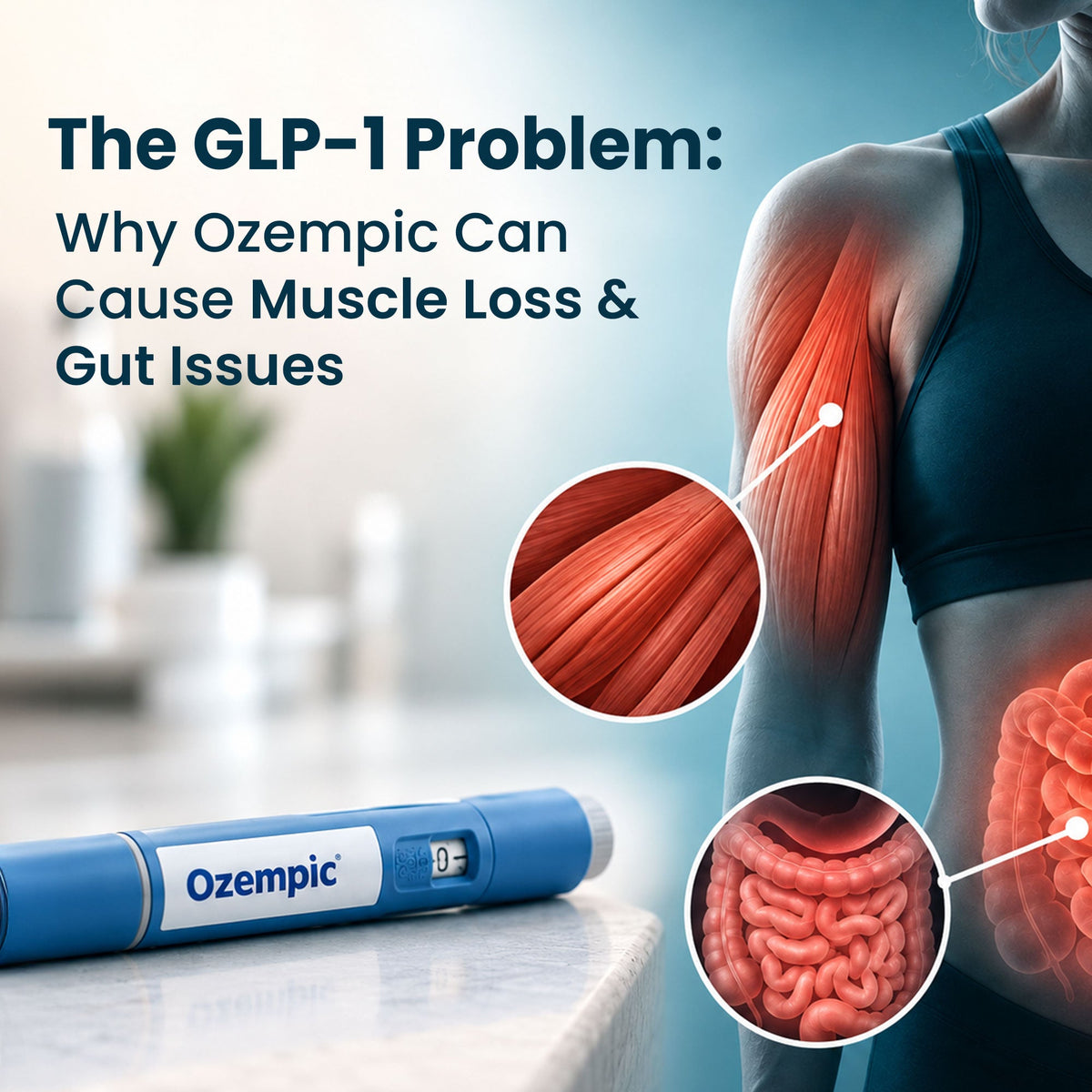
What is and isn't being noticed is the mechanism of action for how Ozempic can cause muscle loss and gut problems. Know about GLP-1, muscle savings, and digestive issues, but also about gut bacteria and the connection with ‘Ozempic' in India!
What Is GLP-1, and How Do GLP-1 Drugs Work?
Glucagon-like peptide-1 (GLP-1) is a naturally occurring hormone that helps control blood-sugar levels, fights hunger and aids digestion.
Once food has been ingested, GLP-1 enhances insulin secretion when blood glucose is high, lowers glucagon and slows stomach emptying, which will reduce blood flow increase. It also produces fullness signals to the brain, which helps you sense fullness, keeping you feeling satiated (Professional, 2026).
Medications which mimic some of these effects are called GLP-1 receptor agonists.
Thus, they have multiple systems to which they can make an impact:
The GLP-1 receptor activation alone stimulates better glucose metabolism, a slowed emptying of the stomach and an increased sense of fullness leading to lower food intake and weight loss.
That's why the question “How do GLP-1 drugs work?” has a more complex answer than just this: They decrease your appetite.
What is the difference between GLP-1 and Ozempic?
This is relevant because 'GLP-1' isn't a drug; it's a different word.
|
Term |
What it means |
|
GLP-1 |
A naturally occurring hormone |
|
GLP-1 receptor agonist |
A medicine that mimics GLP-1 signalling |
|
Semaglutide |
The active drug in Ozempic and Wegovy (Semaglutide Injection (Diabetes), 2026) |
|
Ozempic |
A brand of semaglutide primarily used for type 2 diabetes |
|
Wegovy |
A higher-dose semaglutide product approved for chronic weight management in appropriate patients |
Ozempic and Wegovy contain the same active ingredient, semaglutide, but have different approved uses and dosing regimens (Clinic, 2026).
So saying “I'm taking GLP-1” is a little like saying, “I'm taking antibiotics.” It describes a class, not one specific medication.
How does ozempic work?
Ozempic can provide meaningful clinical benefits when prescribed appropriately.
For adults with type 2 diabetes, it helps improve blood glucose control. Semaglutide can also promote weight loss by reducing appetite and increasing satiety. Certain semaglutide indications have demonstrated cardiovascular and kidney-related benefits in appropriate populations.
Potential Ozempic Benefits Include:
-
Improved blood glucose control
-
Reduced appetite
-
Greater feelings of fullness
-
Weight loss
-
Cardiovascular risk reduction in appropriate patients
-
Potential kidney benefits in specific populations
This is why dismissing GLP-1 medications as merely “weight-loss injections” is misleading.
They're powerful metabolic medicines, but powerful medicines can also have trade-offs.
Does ozempic cause muscle loss?
It can contribute to loss of lean mass during weight loss, but the headline “Ozempic causes muscle loss” needs context.
Whenever someone loses a substantial amount of weight, the weight lost isn't exclusively body fat. Some can come from lean mass, which includes skeletal muscle, body water and other non-fat tissues.
GLP-1 medications can create a substantial calorie deficit because appetite decreases. If someone eats significantly less while consuming insufficient protein and doing little resistance exercise, maintaining muscle becomes more difficult.
Rapid weight loss can increase muscle loss and recommends a combination of resistance training, adequate protein and a slower pace of weight loss to help preserve lean tissue.
Importantly, not every reduction in “lean mass” measured during weight loss means the person has lost the same amount of actual contractile muscle. Body-composition measurements can include water and other lean tissues.
That's why muscle strength and physical function matter alongside the number on a body-composition report.
How to prevent muscle loss on ozempic
If you're prescribed semaglutide, the goal shouldn't simply be:
“Lose as much weight as possible.”
A better goal is:
“Lose excess fat while preserving as much muscle and physical function as possible.”
Three habits become particularly important.
1. Prioritise protein.
Reduced appetite can make it surprisingly difficult to eat enough protein. Include a protein source at each meal:
-
Eggs
-
Fish
-
Chicken
-
Greek yoghurt/curd
-
Paneer
-
Tofu
-
Soy
-
Dal and legumes
Your exact protein requirement depends on factors such as body weight, age, kidney function, activity and medical status, so a personalised target is preferable.
2. Do resistance training.
Walking is excellent for health, but muscles need resistance.
Squats, rows, presses, lunges, resistance bands and weight training provide the mechanical stimulus that tells your body:
“This tissue is still needed.”
3. Don't chase extreme weight loss.
Faster isn't always better. If appetite becomes so suppressed that you're barely eating, feeling weak or unable to train, tell your healthcare professional rather than simply pushing through it.
Is muscle loss on GLP-1 drugs reversible?
Potentially, yes, but don't assume it will automatically come back.
Muscle can be rebuilt through adequate nutrition and progressive resistance training, provided there aren't medical limitations preventing it.
Recent research also shows why the situation is more nuanced than social media headlines suggest. People with obesity receiving semaglutide, lean mass initially declined but then stabilised, while handgrip strength improved significantly over a year.
That's an important distinction:
Less body weight ≠ automatically less strength.
The goal should be to monitor strength, function and body composition, not just kilograms lost.
Ozempic and gut issues: Why does your stomach feel different?
The digestive effects of GLP-1 medications aren't an accident.
One of GLP-1's natural actions is to slow gastric emptying. This can help you feel full for longer, but it can also produce gastrointestinal symptoms.
Common effects include:
-
Nausea
-
Constipation
-
Diarrhoea
-
Vomiting
-
Abdominal discomfort
-
Bloating
-
Indigestion
These effects are particularly common when treatment starts or the dose increases (Cleveland Clinic, 2023).
It's like this:
Food goes into the stomach more slowly → stomach empties slowly → feels full for a longer time → eats less.
So for some, that is their end goal.
Some people may experience their digestive system acting funny, as if it's in slow motion.
Why can ozempic cause constipation and bloating?
While it means smaller portions of food, it can also occur because there is less fibre and fluid intake if someone is unaware of the situation.
Add the slower intestinal transit along with it, and constipation can become an uncomfortable experience.
Someone using a GLP-1 could thus have to make a conscious effort to prioritise:
Protein + fibre + fluids + appropriate physical activity
But don't all of a sudden inundate your diet with lots more fibre if you're already constipated and/or nauseated. If fermentable fibre is consumed in large quantities, it can cause gas and bloating.
When symptoms are particularly profound or persistent, consult with the prescribing clinician instead of relying on supplements to manage symptoms 100%.
Does GLP-1 affect gut bacteria?
The GLP-1 story has one of the most intriguing and least developed aspects.
The GLP-1–gut microbiome relationship is being studied in more depth, and evidence is emerging that GLP-1 receptor agonists have an impact on gut microbes. But what the direction and clinical impact of the changes are remain uncertain in humans.
In a systematic review, GLP-1 medicines were linked with changes to gut microbial composition, with some medicines not showing an effect in some studies, but disease effects were significant in others, and there were significant differences in results between the medicines and between the studies. The authors stressed the need for additional research (Checking Your Browser - reCAPTCHA, n.d.).
Therefore, scientifically speaking, the answer to "Does GLP-1 affect gut bacteria?" is:
Most likely, but specifics of this change in clinical benefit are yet unknown.
This indicates that, at this early stage, it cannot be concluded that a probiotic or prebiotic product will 'automatically cure' the altered microbiomes that come as a side effect of GLP-1 drugs.
Is ozempic available in India?
Yes. Ozempic currently sells in Indian prescription medicine stores, and semaglutides have a variety of other brand names.
A product currently listed for Ozempic 0.25 mg, 0.5 mg and 1 mg dosages, for instance, has different prices based on the strength and supplier. The MRP of the Ozempic 0.25 mg injection is nearly ₹5,660, the MRP of the Ozempic 0.5 mg injection is ₹8,100, and the MRP of the Ozempic 1 mg injection is ₹9,100, but the prices may change depending on the time (Buy Ozempic 0.25mg Injection Online: View Uses, Side Effects, Price, Substitutes | 1mg, 2026).
Ozempic cost in India
|
Strength |
Recently listed MRP* |
|
0.25 mg |
~₹5,660 |
|
0.5 mg |
~₹8,100 |
|
1 mg |
~₹9,100 |
Prices can vary by pharmacy, location, discounts, availability and prescription requirements.
Don't use online pricing as a reason to self-medicate. Ozempic is a prescription medicine, and choosing a dose should be a medical decision.
India also has other semaglutide products, including products intended for weight management. For example, Wegovy is currently listed in India in multiple strengths.
The GLP-1 checklist: Protect muscle and support your gut
If you're using a GLP-1 medication under medical supervision, discuss these areas with your healthcare team:
|
Priority |
What to focus on |
|
Protein |
Include a source at each meal. |
|
Strength |
Progressive resistance training |
|
Fibre |
Vegetables, legumes, and whole grains as tolerated |
|
Fluids |
Maintain adequate hydration. |
|
Digestion |
Monitor constipation, nausea and bloating. |
|
Weight loss |
Avoid chasing unnecessarily rapid loss. |
|
Monitoring |
Track strength, symptoms and relevant clinical markers. |
Conclusion
GLP-1 drugs have transformed the management of type-2 diabetes and obesity. When used correctly and in the context of multifaceted treatment, they can have a significant impact when applied to suitable patients.
But the drug cannot free the user from his responsibilities for care of the muscles, the nutrition and digestive organs.
If appetite dramatically decreases, then you still need protein. Even when you're losing weight, you need resistance training. When digestion slows, attention should be given to hydration, fibre and bowel habits nonetheless.
But when gastrointestinal issues manifest themselves severely, don't suffer it alone; seek medical counsel, not another supplement.
It isn't just about losing weight with a smart GLP-1 or weight loss programme; that's the smartest approach! It's healthy living that's designed to maximise muscle, strength and quality of life.
Disclaimer: This content is for educational purposes only and is not professional medical advice. Ozempic is a prescription medication; always consult your doctor before use. Listed prices are approximate and subject to change.
FAQs
How does Ozempic work?
Ozempic is made with semaglutide, which is a GLP-1 receptor agonist. October has decreased appetite and/or food intake due to its action of improving blood glucose levels, increasing satiety and slowing gastric emptying.
Does OZEMPIC lead to weight loss of muscles?
If you're losing weight with Ozempic, it may mean some lean mass is being lost, especially if you make drastic cuts in calories and protein. Protein and resistance training will help to maintain muscle health.
How can I prevent muscle loss on Ozempic?
Focus on sufficient protein, steady movement during exercise and reasonable rate of body fat loss. Your healthcare providers can assist you in determining the correct nutrition and exercise goals.
Can you retrain muscles in the body after taking GLP-1 drugs?
Depending on the amount of recovery, with the right kind of resistance training, good nutrition, and dedication to recovery, muscle may be rebuilt. Do not wait until the muscle has significantly decreased before you begin muscle loss solutions.
Does GLP-1 impact gut microbes?
It has been proposed that GLP-1 receptor agonists may have an effect on gut microbiota, although results have not been uniform across the different drugs and subjects and are still emerging.
What is the most frequent gut problem experienced by people who have an eating disorder?
Nausea, constipation, diarrhoea, vomiting, abdominal discomfort and bloating are among the commonly reported digestive effects.
Is Ozempic available in India?
Yes. Ozempic is available now via Indian prescription medicine routes, with availability and cost potentially varying. Other semaglutide drugs are also available in India.
References
-
Buy Ozempic 0.25mg injection online: View uses, side effects, price, substitutes | 1mg. (2026, August 6). 1mg. https://www.1mg.com/drugs/ozempic-0.25mg-injection-1088935?utm_source=
-
Checking your browser - reCAPTCHA. (n.d.). https://pubmed.ncbi.nlm.nih.gov/40284168/
-
Clinic, C. (2026, March 17). Wegovy vs. Ozempic: Which Is Better? Cleveland Clinic. https://health.clevelandclinic.org/wegovy-vs-ozempic?utm_source=
-
Professional, C. C. M. (2026, September 10). GLP-1 agonists. Cleveland Clinic. https://my.clevelandclinic.org/health/treatments/13901-glp-1-agonists
-
Semaglutide injection (Diabetes). (2026, August 12). Cleveland Clinic. https://my.clevelandclinic.org/health/drugs/19011-semaglutide-injection-diabetes
Share:
World Mental Health Day 2026: Why Your Mind Won’t Stop Racing at Night