

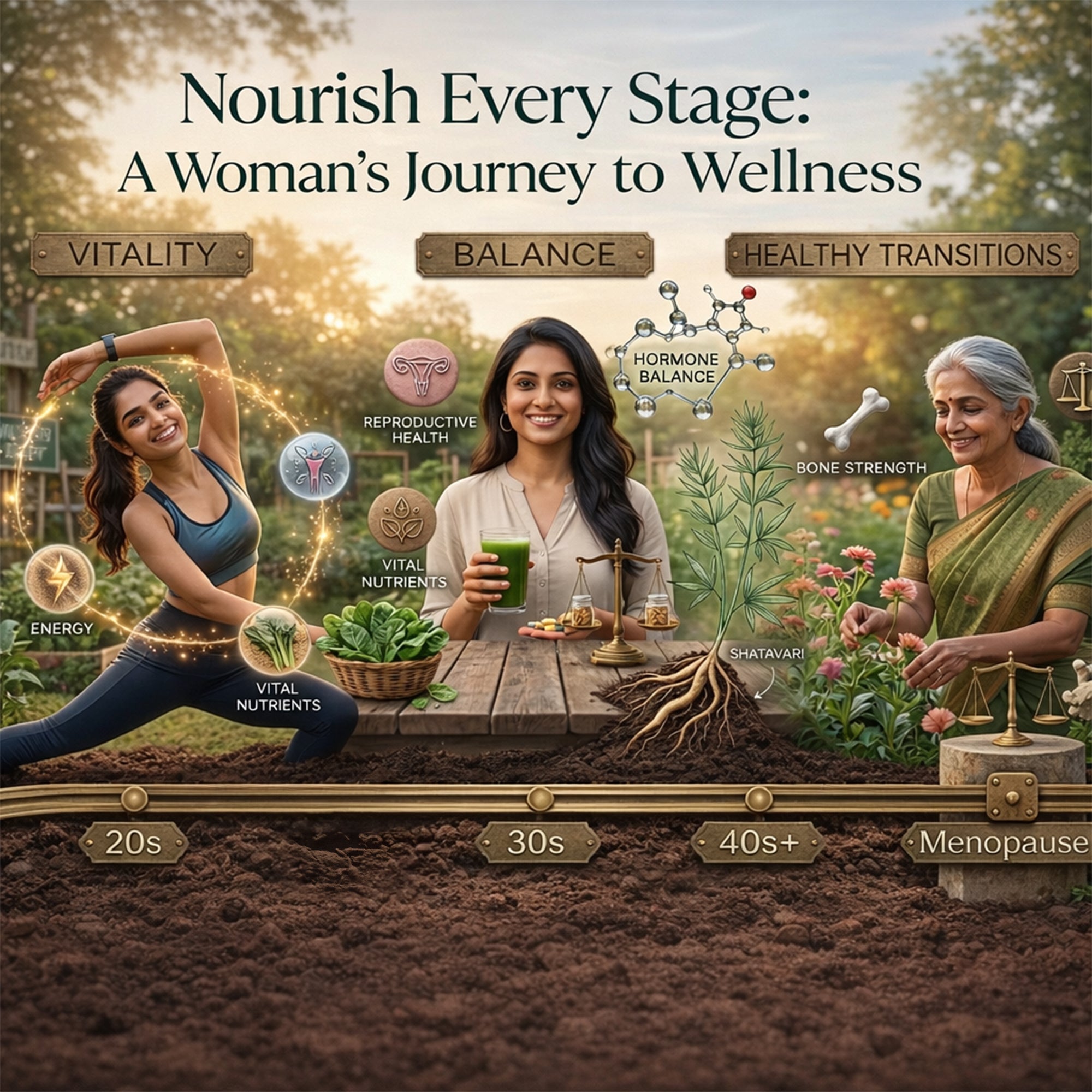
Women's Day Special: Find out what the vitamins a woman needs to take daily are, how the nutritional requirements of the woman vary with her age and the most appropriate supplements that a woman above 30 should take.
Introduction
Women are amazing with their connection to complex bodies that are continuously developing. The hormones vary according to the month, metabolic rates change over the ages and nutritional requirements vary according to the ages. The difference between women and men is that they need specialised nutritional support according to their bodies. However, many women always pose one question: What are the vitamins that a woman needs to take daily in order to stay healthy?
The thing is that the answer evolves. The need of a twenty-to-thirty-year-old female is not the same as that of a person in the state of pregnancy or a thirty-year-old female in the middle of a hormonal peak or older in menopause. Some of the significant nutrients that would help in reproductive health, enhanced bone density and energy generation, and hormone balance are iron, calcium, vitamin D, magnesium, omega-3 fatty acids, and herbal adaptogens such as Shatavari.
The information on the daily nutritional needs of the women will help women in choosing the most suitable multivitamins to be used by females, the most suitable supplements to be used by females over 30 and the best nutritional support to use in menopause. On this Women day, one would want to understand the importance of women having specific nutritional attention at any age.
Why women’s bodies need different nutritional support at every stage of life
It is physiological that women undergo distinct physiological changes in life affecting the absorption, use, and storage of nutrients. Hormones like oestrogen and progesterone control not only metabolism and bones but also mood and reproductive capabilities. Since these hormones vary with the passage of time, nutritional needs also have to vary.
Most important biological characteristics that determine the daily nutritional needs of women.
There are a few biological mechanisms that can justify the need of women to have different nutritional approaches as compared to men.
-
Nutrient requirements are higher during menstruation: Each month, women lose blood through menstruation. The process is a very drastic process in which iron requirements are elevated. In case women fail to get an adequate amount of iron through the food or the supplement, they might experience fatigue, dizziness or anaemia. Sufficient intake of iron promotes energy production and blood circulation as well as vitality.
-
In cases of fertility and pregnancy, the body needs additional nutrients. It should be able to give food to the mother and unborn baby. Vitamins and minerals, including folate, iron, calcium and iodine, and the fatty acids, including omega-3, which help in the development of the foetal brain and maternal well-being, are the key nutrients.
-
The changes that menopause causes to the hormone balance are quite Shocking: As the levels of the oestrogen drop during menopause, women tend to have the following symptoms: hot flushes, mood swings, sleeping problems, and bone loss. At this age, nutritional support is quite required to ensure cardiovascular conditions, bone health, and hormonal balance.
Mutual impacts due to these biological aspects are that the nutritional strategies adopted by women undergo changes with the changes of life phases as opposed to the generic supplements.
What vitamins should a woman take daily?
Among the most frequent questions that women pose about health, there is the question about the vitamins that a woman should take on a daily basis. Although it depends on age, lifestyle, and health history, a number of nutrients are common in the list recommended by experts.
These are the basis of vital nutrients that women should have and healthy living in the long term.
Vitamin D
Vitamin D is linked with the control of calcium absorption, bone strength and immunity. There is almost a flip side to this; however, unfortunately, the disease of vitamin D deficiency has become very widespread, particularly in women spending much time indoors or living in large cities with insufficient exposure to sunlight.
Vitamin D does have a number of values:
-
Helps to have stronger bones: The lack of vitamin D does not allow the body to absorb calcium properly. This raises the chances of getting bone loss and osteoporosis in later stages of life.
-
Enhances immunity: Vitamin D is responsible for equipping immune cells that assist the body to counter the infection and inflammation.
-
Maintenance of mood and mental health: Depressed mood and fatigue, which are consistent with low values of vitamin D, were associated with low levels of vitamin D in many people.
Iron
Iron belongs to the number of most important nutrients amongst women in their prime child-bearing years. It assists the body to synthesise haemoglobin, which is a red blood cell protein that carries oxygen in the body.
Iron deficiency is a highly prevalent form of nutritional deficiency in most parts of the globe, especially in women.
Iron is essential, as it has a number of health benefits:
-
Thought process: Adequate amount of iron supply is what makes him not lose focus, as well as memory and mental acuity.
-
Prevents anaemia: The iron deficiency anaemia can cause weakness, dizziness, paleness of skin, and dyspnoea.
-
Improves healthy pregnancy: The bodies of pregnant mothers require increased iron to support the development of blood and foetus.
Women with heavy periods, vegetarians or those who perform excessive physical exercises might be in need of additional iron.
Calcium
Calcium is a mineral that has the central part to play in the provision of strong bones and teeth. The susceptibility of mothers to loss of bone after menopause is especially high because of dropping levels of oestrogen.
Sufficient levels of calcium consumption are beneficial towards maintenance of skeletal health over a long period of time.
Calcium plays out a number of important roles:
-
Strengthens bones: Calcium levels keep bones strong and high in mass to lower the chances of getting a fracture or osteoporosis (B. C. Rd, 2025).
-
Aids muscle contraction: Calcium signals are necessary in the contraction and relaxation of the muscles.
-
Supports the heart activity: Calcium helps to keep the normal heart rhythm and cardiovascular condition regular.
Since the bone density reduces with age, it is imperative to maintain consistent calcium uptake at an early age.
Vitamin B complex
Several of the most significant nutrients constitute the vitamin B family, i.e., vitamin B6, vitamin B9 (folate), and vitamin B12. The vitamins facilitate energy generation and are vital in the health of the nervous system.
The B vitamins have a number of advantages:
-
Increase energy metabolic rates: B vitamins aid in the body's usage of food for energy.
-
Nourish your brain and its cognitive ability: The vitamin B12 and folate preserve and aid in memorising the healthy nerve cells (Rd, 2024).
-
Favour healthy red blood cell synthesis: These are the nutrients which aid in preventing some types of anaemia.
-
Promote foetal growth and pregnancy: Folate is notably critical in the prevention of the occurrence of neural tube defects throughout pregnancy.
Feminine herbivores might require supplements to ensure that there is vitamin B12 as most of it is present in animal-based foods.
Omega-3 fatty acids
Omega-3 fatty acids are fats that are healthy and have a number of functions that they aid in the body. These fats assist in the lowering of inflammation as well as in the wellbeing of the cardiovascular system (Professional, 2025).
The advantages of the omega-3 fatty acids include:
-
Maintain a healthy heart: Omega-3s maintain heart cholesterol control and inflammatory reactions related to heart disease.
-
Enhance brain performance: These fats will help make the brain work better and this could be helpful in memory and mood.
-
Minimise menstrual pain: Omega-3 fatty acids can be used to reduce menstruation-related pain.
Consumers may get omega-3s in foods either in the form of fatty fish, flaxseeds, chia seeds, and walnuts or via supplements.
The relationship between the nutritional needs of women at various ages.
The nutritional priorities of women change as they grow due to hormonal shifts, lifestyle, and dieting changes as a result of metabolism. Knowledge of these changes will guide women in selecting the most effective supplements for women above 30 years and above.
Nutritional needs in your 20s
Twenties are a time of growth, development and living up to health in the long term.
Some of the priorities at this stage are:
-
Strengthening bones: The maximum bone mass is at twenty years. Proper calcium and vitamin D in this age group prevent osteoporosis as one gets old.
-
Promoting energy metabolism: B vitamins are useful in sustaining energy when the body faces a stressful academic or professional schedule.
-
Promoting reproductive health: Folate and omega-3 fatty acids are good nutrients that facilitate fertility and hormonal equilibrium.
At this stage, many women start taking the best multivitamins for women to have balanced nutrition.
Eating right in your thirties
The thirties usually lead to more responsibilities, stress and hormonal changes. The nutritional support is critical towards the support of energy, metabolism, and long-term health.
Important nutrients during this stage would be:
-
Magnesium as an anti-stressor: Magnesium causes the relaxation of muscles, the calming of the nervous system, and the improvement of sleep.
-
Omega-3 fatty acids and hormonal health: The fats help in producing hormones and suppressing inflammations.
-
Collagen to support the skin and the joints: Collagen supplementation may be successful in supporting skin elasticity, as well as supporting joints.
The nutrients are usually contained in the top-best supplements for women above 30.
What is the effect of Shatavari in balancing hormones of women?
Shatavari is an Ayurvedic herb traditionally used to promote the health of female reproductive health. Shatavari has plant compounds referred to as phytoestrogens. The compounds simulate oestrogen in the body and possibly control the effects of hormone variations.
The possible benefits of Shatavari are:
-
Aiding hormonal support, Phytoestrogen compounds could contribute to the stability in hormone levels during menstruation as well as menopause.
-
enhancing reproductive health Shatavari has long been held to help with and improve fertility and reproductive health.
-
Relieving menopause symptoms: There are women who employ Shatavari in order to deal with hot flushes and moods as well as hormonal pains.
Conclusion
The body of women is one that is in constant change. Hormones fluctuate. Nutritional demands evolve. This is why it becomes necessary to know what vitamins a woman is supposed to consume in a day in order to achieve long-term wellness.
These are essential nutrients, including iron, calcium, vitamin D, magnesium, omega-3 fatty acids, and herbal adaptogens like Shatavari and promote the health of women throughout their lives. Due to the age alteration of the female nutritional requirements, the supplementation plans should follow the same.
FAQs
What are the vitamins that a woman should take on a daily basis?
Among such nutrients, vitamin D, calcium, iron, magnesium, B vitamins, and omega-3 fatty acids are economically valued by all women to make their bodies more desirable and so that their bone strength, energy and hormones increment positively.
How does the age of women affect the nutritional requirement?
The changes in the hormone level are also available and this also rises among women as they age. The food needs to switch to cardiovascular and menopause relief, as opposed to bone development and procreation.
What are the most desired women's supplements among women over 30 years old?
Magnesium, vitamin D, omega-3 fatty acids, collagen and probiotics are the more beneficial forms of supplements that are also beneficial to the metabolism, skin and hormonal balance.
How does Shatavari balance the hormones of women?
Shatavari contains phytoestrogen that is able to avoid hormone imbalance, enhance reproductive health and treat menopause.
References
-
Professional, C. C. M. (2025, December 18). Omega-3 fatty acids. Cleveland Clinic. https://my.clevelandclinic.org/health/articles/17290-omega-3-fatty-acids
-
Rd, B. C. (2025, December 15). Health benefits of calcium. Verywell Health. https://www.verywellhealth.com/calcium-supplement-health-benefits-190470
-
Rd, J. K. M. (2024, June 6). Benefits, side effects, and dosage of B-Complex vitamins. Healthline. https://www.healthline.com/nutrition/vitamin-b-complex
Share:
Holi Skin & Gut Care Guide: How to Prevent Breakouts, Dryness & Bloating After the Festival
World Sleep Day 2026: Why You’re Still Awake (And Why Sleep Pills Aren’t Working Fast Enough)