

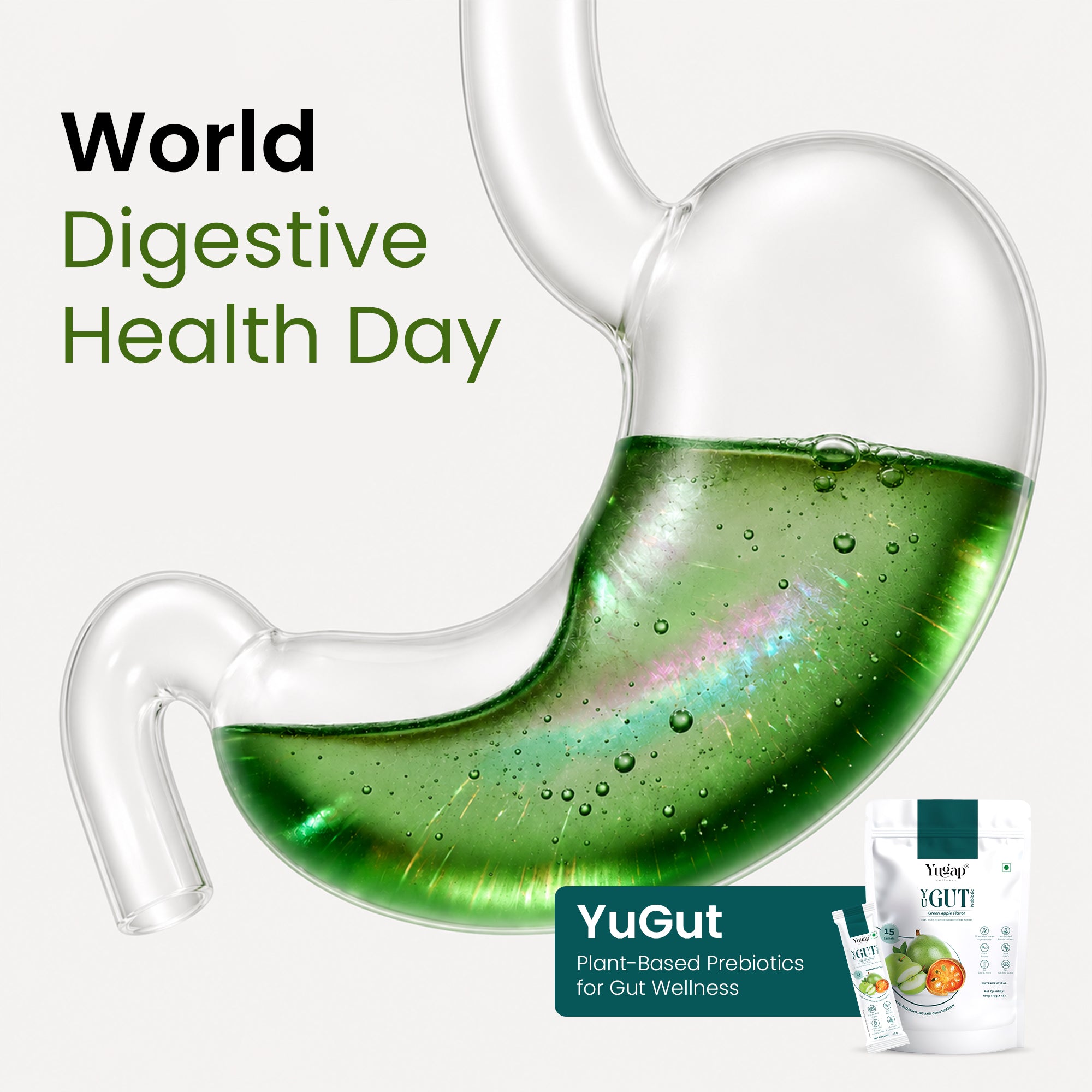
You’ll discover the science behind rebuilding your microbiome with prebiotics on world digestive health day, 2026. You’ll also learn about plant-based supplements, the gut-brain axis and many things related to your gut.
Introduction
Let’s start with what World Digestive Health day is all about. But before that, we shall focus a little on who started World Digestive Health day. In 1935 the “World Gastroenterology Organization" was founded and it was formally incorporated in 1958. The main focus area of this organisation was “the improvement of standards in gastroenterology training and education on a global scale", and ever since, it’s been doing its part. This organisation started what we celebrate today, World Digestive Health day. It is celebrated every year on 29 may to focus on a particular digestive disorder and seek to increase public awareness of prevention and therapy.
Your digestive system affects more than digestion alone. It plays a huge role in immunity, mood, metabolism, energy levels, and even mental clarity through the gut-brain axis. More and more people are looking for microbiome restoration with prebiotics and plant-based gut health supplements in India. In this blog we’re going to cover everything, from fibre-rich foods to traditional ingredients like bael fruit extract, and focus on rebuilding gut health naturally by making it a part of our everyday wellness routines.
Why World Digestive Health Day 2026 matters more than ever
World Digestive Health day was created with a sole purpose: to raise awareness about digestive disorders a person goes through and to promote a better understanding of gut wellness worldwide. But in recent years, we’ve noticed that digestive concerns have become increasingly common and in India, many people are exploring the best gut health supplements.
Following are the reasons behind such a surge:
-
People having highly processed diets
-
Low Fiber diet
-
Less water intake
-
Stress-heavy lifestyles also plays a major role
-
So does irregular sleep pattern
-
And frequent antibiotic use
Such a lifestyle has become a problem and people often face the following:
-
Bloating
-
Irregular digestion
-
Fatigue
-
Brain fog
It has become so common now that people have jumped from wanting temporary relief to sustainable ways to rebuild their gut microbiome naturally.
What’s a gut microbiome?
In order to understand what a gut microbiome is, you need to study your internal ecosystem. However, in simple terms, 'gut microbiome' refers to trillions of microorganisms living inside your digestive tract.
Now these involve several types of microorganisms, such as fungi, bacteria, or any other microorganisms helping your body maintain your body functions.
But a balanced gut microbiome should support:
-
Excellent nutrient absorption
-
Digestive efficiency
-
Better immune system function
-
And a good metabolic health
If you experience issues with digestion, that may mean that your beneficial bacteria is on the decline.
The science of microbiome restoration with prebiotics
To actually learn about the restoration of your microbiome with prebiotics, we need to first understand what prebiotics are.
What are prebiotics?
In simple terms, prebiotics are fibres and non-digestible carbs that act as food for the beneficial bacteria in your gut. Don’t confuse prebiotics with probiotics since probiotics help you include live microorganisms in your body, whereas prebiotics help the existing microbes to grow stronger (Davani-Davari et al., 2019).
For example think of your gut microbiome as a garden
-
In the garden probiotics acts as a seed (that you sow)
-
And prebiotics helps those seeds to flourish
You may try plant-based prebiotics to help your gut microbiome flourish and restore it.
Best things about prebiotics are that many natural foods contain prebiotics, for example,
-
Bael
-
Garlic
-
Onion
-
Bananas
-
Chicory root
-
Oats
-
Apples
These fibres act as fuel for your beneficial bacteria. Now let’s dive a little deep into the difference between prebiotics and probiotics for digestion.
Prebiotics vs probiotics for digestion
From the above example you must have a picture of what prebiotics and probiotics are but that’s not enough. You need to understand what these actually do to your digestion. Starting with probiotics.
What are probiotics?
Probiotics are live microorganisms, like beneficial bacteria and yeasts, that benefit your health when taken in adequate amounts (Professional, 2026).
They support your health by:
-
Helping break down complex nutrients
-
Boosting vitamin production
-
And supporting your immune system functions
Some of the common examples that you can get are the following:
-
Yogurt
-
Kefir
-
Fermented rice
What makes prebiotics different?
Unlike probiotics, which help you add live microorganisms to your body, prebiotics help you feed the organisms that are already present in your microbiome. They create an environment where beneficial microbiomes can be sustained for longer.
Since we’ve covered the differences between probiotics and prebiotics, it’s time to discuss which is better.
Which is better?
The question should never be about which is better. Probiotics and prebiotics serve different purposes. They work the best when they are combined together instead of relying on one.
You should add both prebiotics and probiotics to your diet if you want to take serious advantage of either of them. Now that we’re covered with the gut microbiome, let’s talk about the gut-brain axis and why digestion affects your moods.
The gut-brain axis
In simple terms, Gut-brain axis is the communications that take place between your gut and your brain, meaning it allows your gut and brain to constantly send signals back and forth, influencing your digestion, stress levels, mood, and overall mental well-being.
If your gut is imbalanced, you may suffer from the following:
-
Moodyness
-
High stress
-
And bad sleep quality
This whole thing is also one of the reasons that digestive health has become part of wider conversations around mental wellness. Since now you have an idea about what the gut-brain axis is, it’s time to rebuild your gut microbiome naturally.
How to rebuild gut microbiome naturally
It’s not that hard to rebuild your gut microbiome naturally; you just need to get a few things right. You need to consume a wide variety of plant foods. You should cut out ultra-processed foods, and you should focus on improving your sleep quality. Now let’s talk about this in detail.
Increase plant diversity
You should try adding a wide variety of plant foods to your diet, as it may support your microbial diversity (Professional, 2026a). Foods you can try include:
-
Fruits
-
Vegetables
-
Whole grains
-
Legumes
Reduce ultra-processed foods
Consuming highly processed foods may negatively affect your gut. You should try replacing packaged foods with whole foods; it will help you support your digestive wellness over time.
Prioritise sleep quality
One of the most important things that you need to get right is sleep. Having poor sleep may trouble you with hormone balance, stress response and gut function.
You should read a little about circadian rhythm and follow consistent sleep patterns to support microbiome stability and recovery.
Also, if you want to effectively restore your gut microbiome, you need to feed your beneficial bacteria with high-quality prebiotics daily. YuGut can effortlessly fill the gaps in your daily diet, supporting long-term digestive comfort.
Since we’ve covered how you can rebuild your gut microbiome naturally, We believe you must know what you need to do. Now let’s talk about how bael fruit extract helps you with digestive wellness.
Bael fruit extract and traditional digestive wellness
Also known as Aegle marmelos, bael fruit extract has a great history. It’s long been used in traditional digestive wellness practices across India. It’s also becoming very popular in recent times. Let us understand why.
Why bael fruit extract is becoming popular
In today’s world people are starting to get concerned with their health and there has been a surge of wellness brands. This is one of the many reasons why bael fruit extract is on the rise. With a rise in many wellness brands, we’ve noticed that bael fruit extract is included in many plant-based gut health supplements.
And the reason is because of its fibre content and traditional association with digestive support.
Bael fruit extract is commonly linked with the following:
-
Digestive comfort
-
Bowel regularity
-
Fibre-based gut support
Its growing popularity shows that people now are combining modern nutrition with traditional botanical ingredients. Now we know what bael fruit extraction is and what you should do to rebuild your gut microbiome. Now let’s understand what gut supplements people of India are actually exploring.
Best gut health supplements Indian consumers are exploring
The time when people focused on quick fixes or digestive trends has gone. People are now more mindful of what to choose. Today, consumers focus more on clean labels and plant-based formulations. If you’re new to this, let us help you with what to look in for supplements.
Look for fibre-rich ingredients
Fibre-rich ingredients (prebiotics) may help you sustain beneficial bacteria naturally.
Helpful ingredients that you may look for:
-
Inulin
-
Resistant starch
-
Psyllium husk
-
Acacia fibre
-
Oat fibre
Check for ingredient transparency
If the product you’re looking for doesn’t properly mention an ingredient list, skip it. A clear ingredient list matters more than you think. You should also avoid products that are loaded with artificial colours or vague proprietary blends.
Choose holistic digestive formulations
If the product covers everything that is required for digestive wellness, such as,
-
Prebiotics
-
Digestive enzymes
-
Herbal extracts
-
Fibre blends
You should go for such products, as their broader approach may support digestive health and nutrition more effectively. We’ve talked all about what to choose for your gut and how to rebuild your gut but we still don’t know how to check whether your gut needs all this or not. So let’s understand the signs that your microbiome may need support.
Signs your microbiome may need support
Digestive imbalance is not the same for everyone. It may show up differently for each person. However, some of the common signs include the following:
-
Frequent bloating
-
Constipation
-
Irregular digestion
-
Food sensitivities
-
Low energy
If such symptoms are persistent, you should always consider being checked by a doctor. We’ve talked about diversity in microbiomes, but now let’s understand why that diversity matters.
Why microbiome diversity matters
If you have a low microbial diversity, you may attract several digestive and metabolic issues. However, if you have a diverse microbiome, it is often considered more resilient and adaptable.
You may support diversity through the following:
-
Fibre-rich foods
-
Plant variety
-
Stress management
-
Better sleep
Last but not least, let’s talk about the habits that you may add to your life to support gut health and wellness.
Daily habits that may support gut health wellness
You may add prebiotics, probiotics, or any supplements to your diet. But following that alone won’t give the benefit that you actually require. If you want to make the most out of supplements, you need to form daily habits. Such as:
Eat meals slowly
Eating quickly often contributes to bloating and digestive discomfort, try eating slow; it won’t feel comfortable but it’s good for your gut in the long term.
Stay hydrated
Water intake is often neglected when it shouldn't be. It supports the movement of fibre you take and helps you with overall digestion.
Move your body regularly
In today’s world, we have a very sedentary lifestyle. Physical activity is next to none, which may hamper your digestion and microbial health. If you want to positively impact your digestion and microbial health, start exercising. Even simple habits like walking after meals can help support digestive comfort.
Everything we’ve talked about was built up for this. Let’s now conclude the blog!
Conclusion
Once you have read the blog, you may have gained an understanding that the rest of your wellness is related to the state your digestive system is in. The gut microbiome is able to impact immunity, digestion, mood, energy and even the well-being of the brain's function through the gut-brain axis.
Restoring gut health does not necessarily take place overnight. With regular practice, though, you can start to rebalance your gut and over time find a long-term gut health and wellness routine that includes fibre-rich nutrition, added digestive function aid from plants and stress management.
This World’s Digestive Health Day, focus on what really matters, your gut!
FAQs
Which sources of prebiotics in plants are the most beneficial for the gut?
There's no best to be called. It's possible something that may work for you may not work for someone, and vice versa. The following are some common sources of resistant starches: Bael, oats, bananas, garlic, flaxseeds, chicory root, resistant starches and legumes.
What's the difference between prebiotics and probiotics?
As with their names, the difference is also not very significant. Probiotics open the doors of your body to live bacteria and prebiotics will feed the live bacteria and encourage them.
What is the Gut-Brain Axis?
Think of a "channel" between your gut and brain, through which they exchange information. This is because they communicate with each other via nerves, hormones and biochemical signals. So your gut is also known as the “second brain".
How long does a natural restoration of the gut microbiome take?
Enhancing the gut takes time, and the outcomes are reliant on diet, way of living, tension, and consistency.
References
-
Davani-Davari, D., Negahdaripour, M., Karimzadeh, I., Seifan, M., Mohkam, M., Masoumi, S., Berenjian, A., & Ghasemi, Y. (2019). Prebiotics: definition, types, sources, mechanisms, and clinical applications. Foods, 8(3), 92. https://doi.org/10.3390/foods8030092
-
Professional, C. C. M. (2026a, March 16). Gut microbiome. Cleveland Clinic. https://my.clevelandclinic.org/health/body/25201-gut-microbiome
-
Professional, C. C. M. (2026b, March 16). Probiotics. Cleveland Clinic. https://my.clevelandclinic.org/health/treatments/14598-probiotics
Share:
Summer wellness tips for glowing skin: hydration, gut health & antioxidant support
Your Complete Wellness Routine: Morning to Night with Yugap