

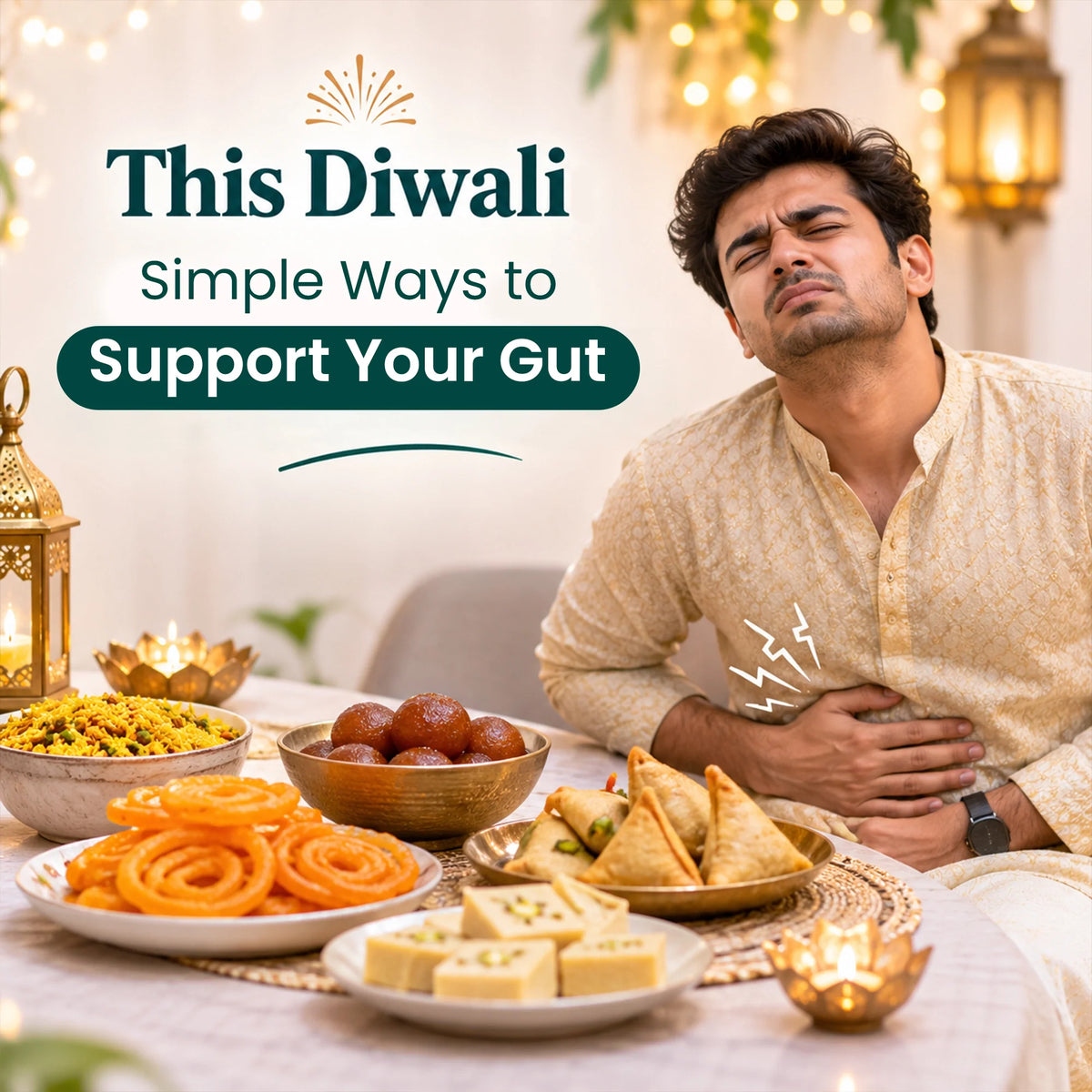
Experiencing Diwali bloating? Learn some useful digestion tips, digestive hacks to ease that bloated tummy feeling and how to keep your tummy happy, healthy and warm throughout festivals.
Introduction
A hot plate of samosas, some kaju katli, crispy pakoras, good rich curry and something fizzy. One of the best aspects of Diwali is the festive food. After a day of fun and festivities, you may experience indigestion, abdominal discomfort or an oily feeling, acidity, bloating, and gas.
Sound familiar?
Festivals bring with them changes in eating habits. Meals get bigger, fried foods are introduced, and there's increased consumption of sweets and snacks as well as late meals. With all of your irregular sleep routines, decreased physical activity and carbonated beverages combined, your digestive system might have to deal with more than normal.
The good news? Even though you might think you must steer clear of your favourite food items during the holidays, there is no need to completely avoid them.
You can make some simple adjustments and still have fun with Diwali without harming your gut health during your holiday.
Why does Diwali cause bloating and digestive problems?
Bloating is a fullness or pressure in your abdomen that is not comfortable. It can happen when there is excessive gas in the stomach, when digestion is hindered or when you are sensitive to a normal amount of gas.
At the time of Diwali, there are several things that can make us uncomfortable.
1. Eating too much at once
Commonly, festive meals are made up of several dishes that are served together. Eating too much can make the stomach distend and make you feel too full. Rushing your meals can mean that you swallow more air and end up belching and bloating as well.
2. Fried and high-fat foods
Samosas, kachoris, puris and pakoras are also mouthwatering, but some people consider them high-fat foods, and they worsen their indigestion. For functional dyspepsia sufferers, fatty or greasy foods, which are recognised triggers of symptoms like discomfort in the upper abdomen and bloating, are a dietary issue to keep tabs on (Eating, Diet, &Amp;Amp; Nutrition for Indigestion, 2026).
3. Too many sweets and sugary drinks
Most traditional sorts of sweets heavily rely on concentrates of sugar, fat and dairy. In large amounts, these can result in digestive upsets, especially for people with lactose intolerance or sensitivity to some of the ingredients.
Carbonated beverages can make matters worse as they insert gas in the digestive tract.
4. Irregular meal timings
Eating a small breakfast and attempting to save room for dinner may result in a high caloric intake at night. You can get to a ravenous celebration and finish the meal quickly and without even realising it.
It's not just one meal during the holiday, but a mixture of overfilling your plate , eating too fast and eating out of order.
Diwali bloating remedies: 7 ways to support your gut
There's no need for a complicated clean-up after a festive meal. Follow basic practices to relax the digestive system.
1. Eat slowly and practise portion control
The easiest way to prevent bloat at festivals is to take it easy.
With a variety of different items to try, you might want to taste a little of all of them very rapidly. But slow eating helps you with satiety and helps to minimise excess air swallowing.
Here are some tips for digestion during the holiday season:
-
Stick to small servings.
-
Chew food thoroughly.
-
Try and refrain from eating when time is of the essence.
-
Take a break before going for another serving.
-
When you feel good and satisfied, stop.
It is possible to eat your favourite sweet treats without having to take every meal as a challenge.
It is best to take your time eating, chew your food sufficiently, and limit portion sizes, chew their food sufficiently and limit their portion sizes for easy digestion (Website, 2026).
2. Stay hydrated throughout the day
The proper function of the bowel depends on ample water, and this will prevent constipation, a cause of bloating.
Water is also sometimes substituted with servings of tea, coffee, and sugary drinks, including drinks with carbonation, during Diwali. It's better to stick to drinking water regularly instead.
Practical hydration tips:
-
Always have a water bottle handy.
-
Consume water over a period of time, not in a single gulp.
-
Crush and add vegetables that contain lots of water, like cucumber and fruits.
-
Decrease soft drinks if they cause your body to bloat.
Don't drink too much water right after eating, and avoid having it to relieve the bloating. Rather than trying to compensate for hydration later, it's more beneficial to just stay hydrated.
3. Take a gentle walk after meals
There's no need to work out all the way after a holiday meal.
A relaxing stroll promotes normal bowel movements and may aid in passing gas through your system. It can even stop you from sitting all evening after a good evening's dinner.
If you can walk 10-15 minutes comfortably after meals, take a stroll!
Walking is one useful physical activity to help deal with bloating (Professional, 2026).
4. Balance sweets with fibre-rich foods
You don't have to give up kaju katli, gulab jamun or laddoos.
Instead, make sure your overall diet includes vegetables, fruits, whole grains, beans and lentils. These foods provide dietary fibre, which supports bowel regularity.
However, there's one important detail: increasing fibre suddenly can temporarily increase gas and bloating. If your usual diet is low in fibre, increase it gradually and drink enough fluids.
Some useful Indian food choices include:
-
Papaya
-
Guava
-
Oats
-
Moong dal
-
Cooked vegetables
-
Whole grains
-
Cucumber
-
Seasonal fruits
5. Be mindful of foods that trigger acidity
Rich festive meals can aggravate acidity or indigestion, particularly if you already experience acid reflux.
Common triggers for some people include:
-
Deep-fried foods
-
Very spicy dishes
-
Chocolate
-
Coffee and strong tea
-
Alcohol
-
Large meals close to bedtime
Individual triggers vary, so pay attention to how your body responds rather than eliminating every food unnecessarily.
To prevent acidity during festivals, avoid lying down immediately after dinner. Try leaving around three to four hours between eating and going to bed when managing indigestion (Website, 2026b).
Natural remedies for stomach bloating: What may help?
Some simple household habits may help you feel more comfortable after a heavy meal.
|
Remedy or habit |
Potential benefit |
What to remember |
|
Ginger tea |
May feel soothing for some people |
Can worsen heartburn in some individuals |
|
Peppermint tea |
May help with some digestive discomfort. |
Peppermint can aggravate acid reflux. |
|
Warm water |
Helps maintain hydration |
Doesn't directly remove trapped gas |
|
Gentle walking |
Encourages intestinal movement |
Avoid strenuous exercise after a heavy meal. |
|
Fennel seeds (saunf) |
Traditionally used after meals |
Strong clinical evidence for bloating relief is limited. |
These remedies aren't guaranteed treatments. If bloating is frequent or severe, identifying the underlying cause is more important than repeatedly trying home remedies.
Gut support supplements India: Do you need them during diwali?
The market for gut support supplements in India includes probiotics, prebiotics, digestive enzymes and fibre supplements. But should you take them simply because you've eaten more than usual?
Not necessarily.
Different supplements serve different purposes.
|
Supplement type |
What it does |
|
Probiotics |
Specific live microorganisms that may provide health benefits |
|
Prebiotics |
Substances used by certain beneficial gut microorganisms |
|
Fibre supplements |
Help increase dietary fibre intake |
|
Digestive enzymes |
Help break down particular components of food |
A supplement isn't a shortcut for overeating, and not every probiotic works for every digestive complaint. Some probiotics and prebiotic fibres can actually increase gas or bloating in certain people.
If you regularly experience digestive symptoms, speak with a healthcare professional before choosing a supplement.
The best starting point is usually a balanced diet, adequate hydration and consistent eating habits, not a cupboard full of supplements.
A simple festive-day diet for better digestion
You can enjoy traditional Diwali food while keeping your meals reasonably balanced.
|
Time |
Meal idea |
|
Breakfast |
Vegetable poha, or oats with curd, if tolerated |
|
Mid-morning |
Guava, papaya or another seasonal fruit |
|
Lunch |
Dal, roti or rice, cooked vegetables and curd |
|
Evening |
A small portion of your favourite festive sweet |
|
Dinner |
A balanced meal with protein, vegetables and a moderate carbohydrate portion |
This is no hard and fast diet regime. It's just the idea of getting familiar foods into their plate without letting them skip out on meals and compensate for it later.
When is festive bloating more than just overeating?
It is normal to have a rumbling tummy from time to time following a big meal. But when symptoms last longer or intensify, it doesn't necessarily mean that festive food is the culprit.
If you have any of the following symptoms, you should see a medication expert:
-
Dripping, pooling or prolonged urination or bowel issues.
-
Abdominal pain that is intense and/or getting worse.
-
Repeated vomiting
-
Stool or blood in stool (black)
-
Unexplained weight loss
-
Fever and digestive complaints.
-
Difficulty swallowing
Whilst abdominal pain is quite common, if it is severe, it may be accompanied by vomiting blood or other worrying symptoms and should be treated in an urgent manner. If symptoms continue, then you should consider checking for food intolerance, constipation, reflux and/or digestive issues (Professional, 2026b).
Conclusion
Diwali is a celebration of food, family, tradition and celebrations. There is no need to feel guilty for their sweets/snacks or even enjoying a little of their favourite snack.
However, the holiday season's gut health is important as well!
Make yourself take more time at the table, pay attention to quantities, drink lots of water, introduce more fibre into your diet and stroll away. Know foods that can increase your acidity and refrain from taking any "cleaning" supplement or product to "clean" up after overindulgence.
Mostly, follow your body's cues!
Healthy digestion may not be as difficult as you think if you don't have to suffer through the holidays and the accompanying indigestion with everything in place.
FAQs
How am I going to prevent bloating at festivals?
Eat in small bites, take time to chew your food thoroughly, take small sips of water, and if the foods bring on symptoms, avoid carbonated drinks. Add gentle walking post meals and drinks.
How to quickly relieve stomach distension?
Take it easy, drink water and no extra large meals or soda pop! It depends on what the problem is, and each person may need a different treatment process to be effective right away.
Do sweets make you bloated?
Some sweets might aggravate the situation due to the presence of excess fat, sugar or dairy in them. It is possible for lactose intolerant and/or sensitive people to have symptoms more easily.
If you've overindulged at Diwali, what do you do?
Take a step back to a healthy and well-rounded diet. Choose foods that have worked in the diet plan before – vegetables and protein, water – and not go too far with the detox plan.
Can probiotics help prevent bloating at the festive season?
Certain probiotic strains have a beneficial effect on specific digestive disorders; benefits vary according to the strain. Be aware that it doesn't only work after eating too much.
What are the ways of preventing acidity during festivals?
Don't eat large meals; no more than three to four hours before bedtime, try to find triggers in your own diet, and if reflux occurs, avoid a lying position for three to four hours after a meal.
References
-
Eating, Diet, & Nutrition for Indigestion, (2026, June 2). National Institute of Diabetes and Digestive and Kidney Diseases. https://www.niddk.nih.gov/health-information/digestive-diseases/indigestion-dyspepsia/eating-diet-nutrition
-
Professional, C. C. M. (2026a, May 7). Bloated stomach. Cleveland Clinic. https://my.clevelandclinic.org/health/symptoms/21740-bloated-stomach
-
Professional, C. C. M. (2026b, May 7). Bloated stomach. Cleveland Clinic. https://my.clevelandclinic.org/health/symptoms/21740-bloated-stomach
-
Website, N. (2026a, September 7). 5 lifestyle tips for a healthy tummy. nhs.uk. https://www.nhs.uk/live-well/eat-well/digestive-health/five-lifestyle-tips-for-a-healthy-tummy/
-
Website, N. (2026b, September 7). Indigestion. nhs.uk. https://www.nhs.uk/conditions/indigestion/
Share:
Fibremaxxing for Gut Health: Does Eating More Fibre Actually Work?